Steel Casing Boring is a trenchless method used to install protective steel casings under highways, railroads, airports, and other critical infrastructure. The casing acts as a durable sleeve, housing water mains, sewer lines, gas pipelines, power conduits, and telecom lines while ensuring compliance with DOT and railroad regulations.
At Trinity Boring Solutions, we specialize in safe, precise Steel Casing Boring using auger boring machines, jack-and-bore techniques, and engineered jacking pits. From small-diameter utility crossings to large municipal and industrial installations, we deliver efficient casing bores backed by QA/QC documentation.
INSERT IMAGE HERE – Auger boring machine pushing steel casing
Alt text: Auger boring machine installing steel casing under roadway
Hero CTA – Why Choose Our Steel Casing Boring Services?
- ✅ Auger boring and jack & bore methods
- ✅ Compliant with DOT, railroad, and municipal standards
- ✅ Licensed, insured crews with full QA/QC reporting
- ✅ Same-day quotes and 24/7 emergency mobilization
- ✅ Steel casings from 6” to 72”+ diameter
What Is Steel Casing Boring?
Steel Casing Boring is the process of installing steel casing pipe underground without open-cut trenching. The casing is pushed or auger-bored through the soil, while spoils are removed using augers. Once installed, utilities are pulled or pushed inside the casing for long-term protection.
This method is required by DOTs, railroads, and airports whenever utilities cross under major transportation corridors. It ensures that if utilities ever need replacement or repair, crews can work inside the casing without disturbing the roadway or rail line above.
👉 External Link: Akkerman – Auger Boring Systems
INSERT IMAGE HERE – Stacked steel casing pipes ready for bore
Alt text: Steel casing pipes staged for trenchless boring installation
Why Steel Casing Boring Matters
Steel casing provides:
- 💪 Long-term structural protection for utilities
- 🛡 Compliance with DOT and railroad utility crossing requirements
- 🌍 Minimal disruption to roads, rail, and airports
- ⏱ Faster installation compared to trenching
- 💲 Reduced restoration and relocation costs
👉 Internal Link: Cased Boring Services
The Steel Casing Boring Process (Step by Step)
Site Preparation & Bore Pits
Entry and exit pits are excavated, shored with trench boxes or sheet piling, and prepared for auger boring equipment.
Equipment Setup
Auger boring machine or jacking frame is aligned with the bore path.
Casing Installation
Steel casing segments are welded together, pushed through the soil, and spoil is removed via augers or conveyors.
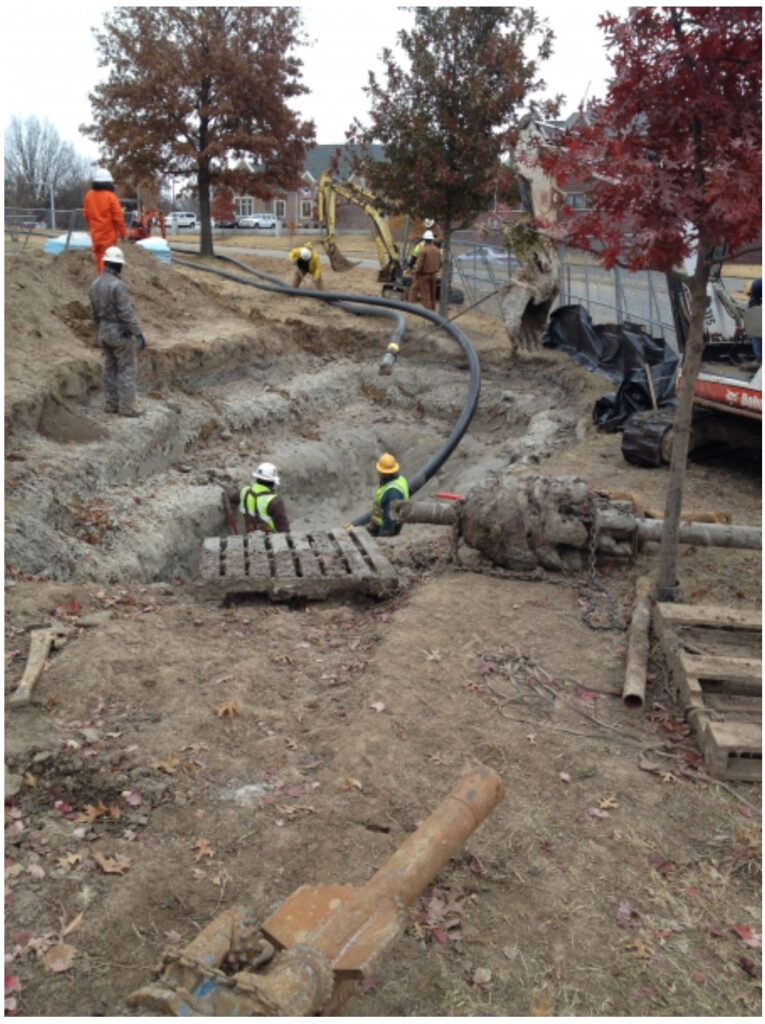
INSERT IMAGE HERE – Bore pit with auger boring machine
Alt text: Auger boring machine inside shored pit installing steel casing
Utility Placement
Once casing installation is complete, product pipes or conduits are placed inside the sleeve.
QA/QC & Documentation
Final alignment, weld inspections, and as-built reporting provided.
👉 Internal Link: Underground Electric Conduit Services
Applications of Steel Casing Boring
- 🚦 Highway utility crossings
- 🚆 Railroad and light rail utility crossings
- 🛫 Airport runway and taxiway crossings
- 🚰 Municipal water, sewer, and storm lines
- 🔥 Oil & gas pipelines
- ⚡ Power conduits and electrical duct banks
- 📡 Telecom and fiber optic bundles
INSERT IMAGE HERE – Crew welding steel casing sections together
Benefits of Steel Casing Boring
- 🎯 Accuracy: Bore alignment maintained with auger boring machines
- 🛡 Safety: Meets DOT, FAA, and railroad regulations
- 🌍 Environmental: Reduces excavation and surface disturbance
- ⏱ Efficiency: Faster installation under critical infrastructure
- 💲 Cost Savings: Reduces restoration costs vs open-cut trenching
👉 External Link: Federal Railroad Administration – Utility Crossing Guidelines
Industries That Rely on Steel Casing Boring
- Oil & Gas – pipeline crossings under roads & rail
- Utilities – water, sewer, and storm mains
- Telecom Providers – fiber conduit protection under highways
- Municipalities – utility upgrades without open-cut disruption
- Airports & Transportation – runway and taxiway utility crossings
👉 Internal Link: Long-Distance HDD Services
Safety & Compliance in Steel Casing Boring
Safety is central to all casing bores. We follow OSHA excavation standards, DOT utility regulations, and railroad crossing requirements.
Protocols include:
- Shored pits with trench boxes or sheet piling
- Welded casing joint inspections
- Bore monitoring for grade and alignment
- Spill containment and spoil management
- Railroad/DOT permit compliance
INSERT IMAGE HERE – Shored bore pit with auger boring setup
Alt text: OSHA-compliant shored bore pit for steel casing boring
👉 External Link: OSHA Excavation Safety Standards
Steel Casing Boring Specs & Capabilities
Sizes & Lengths
- Casings: 6” – 72”+
- Bore lengths: up to 600+ ft depending on soil
Ground Conditions
- Clays, sands, and silts
- Gravel and cobble
- Rock (with specialty cutting heads)
Methods Supported
- Auger Boring
- Jack & Bore
- Pipe Ramming (for hard soils/rock)
Costs & Scheduling
Steel Casing Boring cost depends on:
- Casing size & length
- Ground conditions
- Access for bore pits
- Regulatory permitting requirements
Timelines:
- Small highway bore: 2–3 days
- Large railroad crossing: 5–7 days
- Rock formations: extended durations with specialty cutters
Case Studies – Steel Casing Boring Projects
Highway Crossing for Sewer Main
A 24-inch casing installed under a state highway. 400 ft completed in 4 days with full QA/QC reporting.
Railroad Crossing for Fiber Optic
A 12-inch casing bored under freight tracks with no service disruption.
Municipal Water Main Upgrade
A 36-inch casing installed under an arterial roadway to house new water main.
INSERT IMAGE HERE – Steel casing installed under roadway
Alt text: Completed steel casing bore under highway for municipal water line
FAQs About Steel Casing Boring
- What is Steel Casing Boring?
It’s a trenchless method for installing protective steel casings under highways, railroads, and airports. - When is casing required?
When crossing DOT-controlled highways, railroads, or airport runways. - What casing sizes can you install?
From 6 inches to over 72 inches. - How long does it take?
Small bores: 2–3 days. Large crossings: up to a week or more. - What utilities can go inside casing?
Water, sewer, storm, gas, power, and telecom. - Can casing bores be installed in rock?
Yes, with pipe ramming or specialty cutting heads. - Do you provide QA/QC reports?
Yes, including weld inspections, alignment data, and as-builts.
👉 Schema Tip: Add FAQ block in RankMath for schema markup.
References & Standards
- OSHA Excavation Safety Standards
- Federal Railroad Administration – Utility Crossing Guidelines
- Akkerman – Auger Boring Systems
Why Choose Trinity Boring Solutions for Steel Casing Boring
We’re trusted for safe, efficient, and compliant Steel Casing Boring. Our crews use auger boring and jack & bore machines to deliver accurate casing installations that meet DOT, FAA, and railroad requirements.
- Experienced casing boring crews
- Full QA/QC and weld inspections
- Railroad & DOT permit compliance
- Safe, accurate casing installations
- Emergency mobilization available
Service Areas
We provide Steel Casing Boring services for contractors, municipalities, industrial clients, and utilities across the region.
👉 Internal Link: River & Waterway Crossing Services
Get a Free Quote for Steel Casing Boring
📞 Call us: (000) 000-0000
📧 Use our Fluent Form for a same-day response
INSERT VIDEO HERE – YouTube embed of auger boring process
Alt text: Video showing auger boring machine installing steel casing under roadway